
Easy Poppy Oil Painting in a Cozy Studio (Beginner Tutorial)

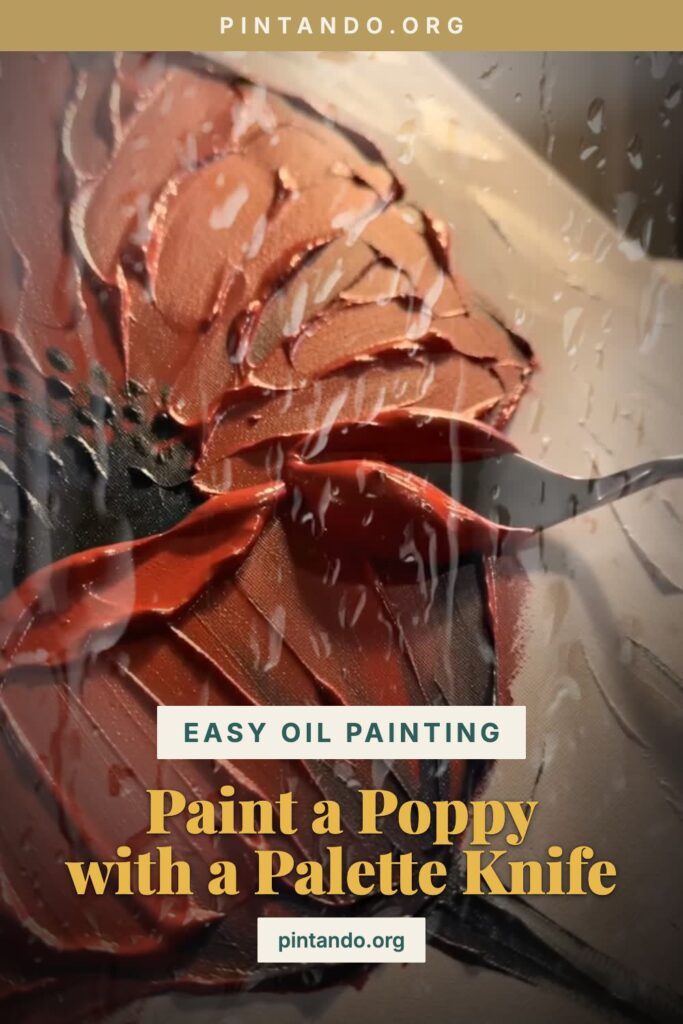
The Easiest Thing to Paint on a Slow Afternoon: One Red Poppy in Thick Oil
When people ask me for easy painting ideas — something to do on a grey afternoon with a cup of tea going cold beside the easel — I almost always say the same thing: paint one poppy. Not a field, not a bouquet. One bloom, big on the canvas, in thick red oil paint you can push around with a knife. It's the most forgiving subject I know, and it gives you that cozy-art-studio feeling within the first five minutes.
A poppy works because it forgives you. The petals are crumpled, not smooth — so every uneven ridge of paint reads as a fold instead of a mistake. The red is allowed to be loud. And the dark heart hides a multitude of sins. You genuinely cannot make an ugly poppy if you keep the paint thick and your hand loose.
Why a single poppy beats a "real" painting
The trap with painting ideas is reaching for something impressive and stalling out before you've enjoyed any of it. A single poppy flips that. You commit one big shape to the canvas, and from there it's all play — loading the knife, dragging a petal, catching the light on a ridge. It's closer to icing a cake than to drafting a landscape, and that's exactly why it feels so good.
It's also why poppies make such a satisfying watch. The thick paint catches the studio light, the palette knife leaves a clean wet edge, and the whole thing comes together in a handful of confident moves. That tactile, almost-ASMR quality is the heart of the cozy painting-studio aesthetic — and it's completely within reach for a beginner.
How to paint a poppy in oils (the easy way)
You need three colors, a flat brush, and a small palette knife. That's the whole kit.
- Block the bloom in red. Mix a warm red (cadmium red with a touch of crimson) and lay the flower's big shape with a flat brush — a rough circle of five or six petals. Don't fuss the edges; poppies don't have neat ones.
- Build the petals with the knife. Load the palette knife with thicker red and drag each petal outward from the center, letting the paint ridge up. Those raised ridges are what catch the light later — the more texture, the more alive it looks.
- Carve the shadows. Pull a darker red (add a little black or deep green) into the cup of the flower and where petals overlap. You're not blending — you're stacking. Let the colors sit side by side.
- Drop the dark heart. A blue-black center with a ring of little stamen dots. This single dark note is what makes the red blaze by contrast — it's the spark the whole flower hangs on.
- Add the highlight ridge. One last scrape of bright, almost-pink red along the top edge of a front petal, sitting up off the canvas. Done.
Keep the paint thick the whole way through. The moment a poppy looks flat or muddy, it's because the paint got thin and over-mixed — scrape it back, reload the knife, and lay a fresh confident stroke on top. Thick and decisive always beats thin and careful here.
Make it a cozy ritual
Half the reason I keep coming back to poppies is the setting it gives me an excuse for: warm lamp, rain on the window, a slow playlist, no pressure to make anything gallery-worthy. That's the real cottagecore-studio appeal — the painting is almost a side effect of the afternoon. (If that mood is what you're really after, I wrote a whole slower piece on painting poppies just to unwind — less how-to, more cozy ritual.) Paint one poppy badly, then paint the next one a little better, and let the pile of small red blooms be the point.
So that's my standing answer for what should I paint? — start with one poppy, keep the paint thick, and let the studio do the rest. What's your go-to easy subject when you just want to paint something calming? Tell me in the comments.
You might also enjoy these articles: