
How to Paint Aivazovsky's Ninth Wave (the Glowing-Water Secret)

How to Paint Aivazovsky's Ninth Wave — the Secret to Glowing Water
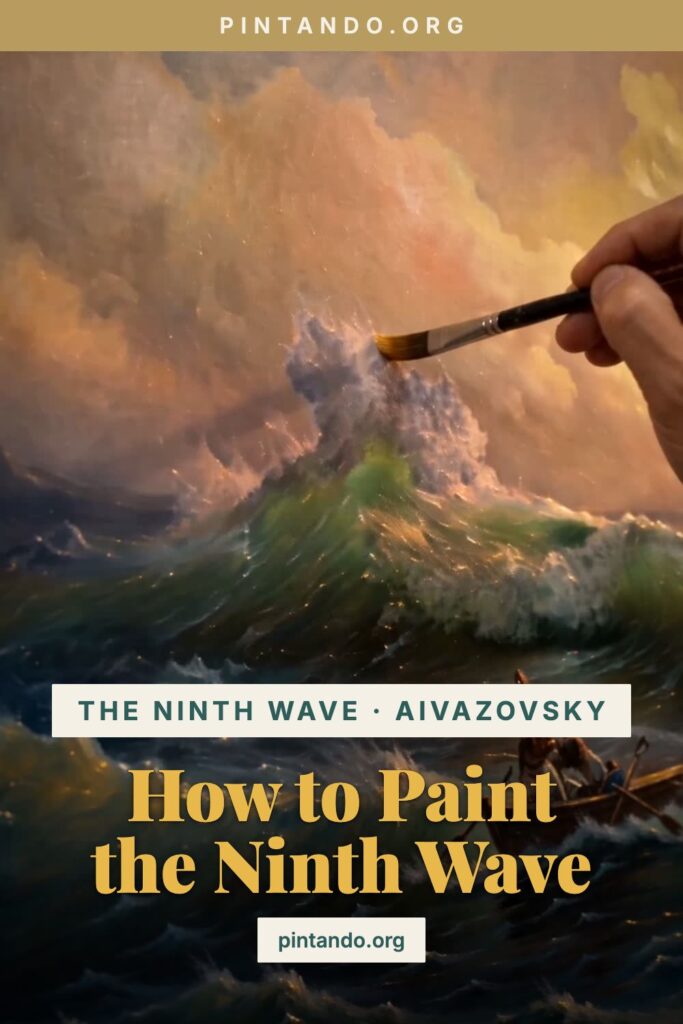
If Hokusai's wave is about line, Aivazovsky's is about light. Stand in front of The Ninth Wave (1850) and the sea seems lit from inside — the water glows gold and green as if the sun were shining up through it. People assume that glow takes a magic touch. It doesn't. It takes transparency, and a painter who refused to copy the sea in front of him.
The painting shows a handful of shipwreck survivors clinging to a broken mast at dawn, the storm passing, a huge wave — the "ninth wave" — rising in front of them. Sailors long believed waves came in sets that grow, and that the ninth is the biggest and most dangerous. So the scene sits right on the knife-edge between disaster and rescue: terrible danger, and a sunrise breaking through. That warm light against the cold sea is the whole emotional engine of the picture.
The glow is glazing, not white paint
Beginners try to make water sparkle by piling on white and bright color. Aivazovsky did the opposite. He built his luminous water with glazes — thin, transparent layers of paint laid over a lighter ground, so light passes through the color, bounces off the bright layer underneath, and comes back to your eye glowing. It's the same reason stained glass shines: light coming through, not bouncing off. Pile paint on thick and opaque and the glow dies; keep it thin and transparent over a luminous underpainting and the water lights up.
And here's the part that surprises people: he painted the sea from memory. Aivazovsky believed moving water could never be captured by sitting in front of it — by the time you mixed a color the wave was gone — so he studied the sea for hours, then painted it back in the studio from feeling, often finishing a canvas in a single sitting. He made something like 6,000 paintings this way over his life. You're allowed to do the same: paint the feeling of light on water, not a frozen photograph of it.
What makes the light read
- Light first, dark around it. Establish the bright sun and sky early, then build the darker water around it. The picture is lit from that one warm source.
- Keep the lit water transparent. Where the sun shines through the wave's crest, let the color stay thin and glowing — green-gold, not opaque.
- Warm light, cool shadow. Golden, rosy lights; cool blue-green shadows. That temperature split is what makes light feel like light.
- Tiny figures, huge feeling. The small survivors give the wave its scale — and its stakes. Don't skip them.
How to paint your own glowing wave
- Underpaint light. Tone the canvas or block in a warm, fairly light ground where the glow will be — you're saving brightness to glaze over later.
- Place the sun. A radiant warm sunrise low in the sky, its light spilling a path across the water. Everything keys to this.
- Build the wave thin. In the crest where light passes through, use thin transparent green-gold — glaze, don't slather. Let the bright ground show through.
- Shadow the troughs cool. Deeper blue-green in the hollows, so the lit crest glows by contrast.
- Add the survivors and spray last. A small dark mast and figures for scale; a few flecks of foam where the light catches.
If your water looks flat or muddy, you went opaque too soon — let a layer dry and glaze a thin transparent color over it, and the glow comes back. Light through paint, not paint on top of paint. That single idea is most of Aivazovsky.
This is part two of the famous-seascapes series — after Hokusai's Great Wave. Two masters, two completely different ways to paint the sea: one all line and silence, one all light and glow. Which sea should I paint next?
You might also enjoy these articles: